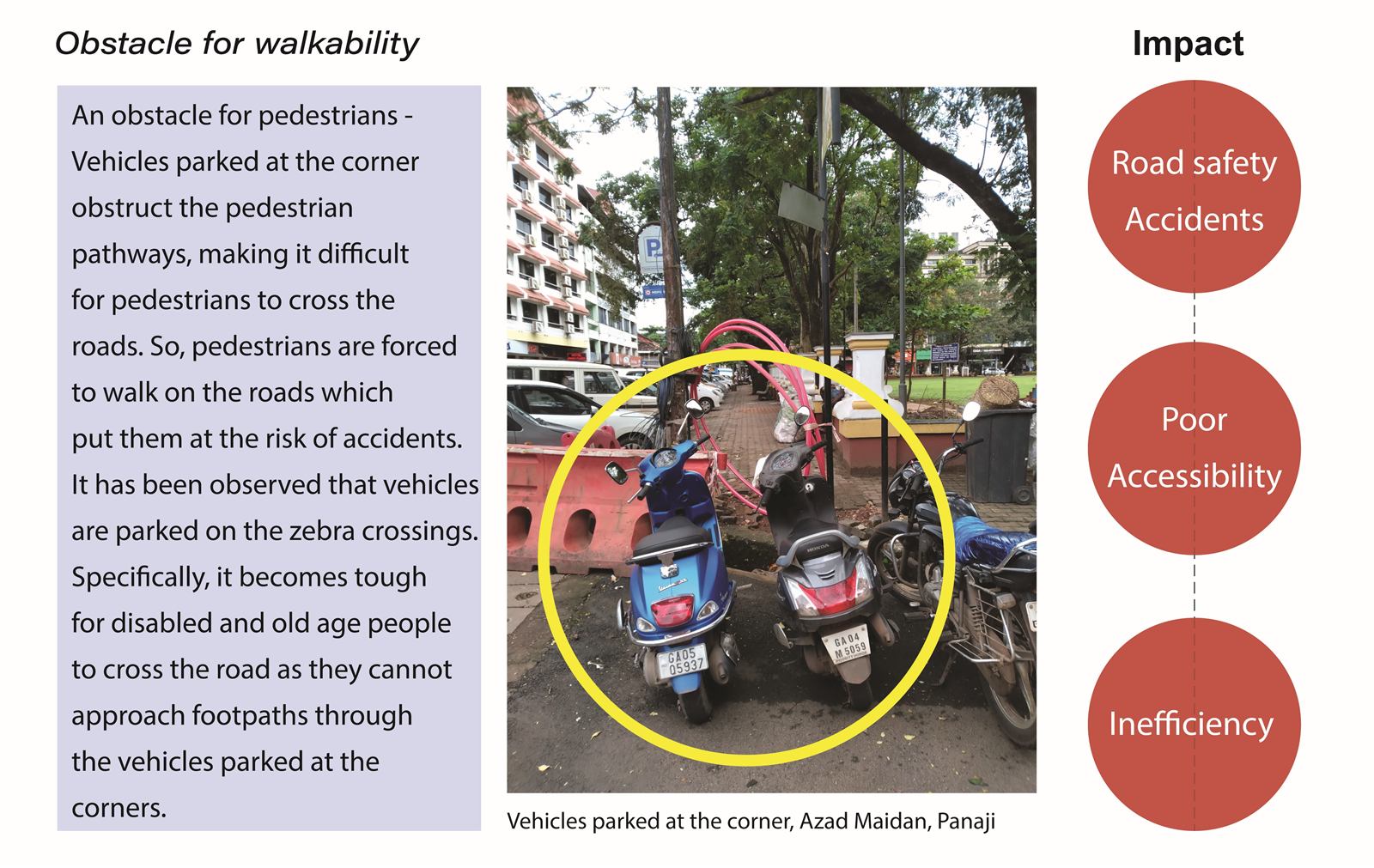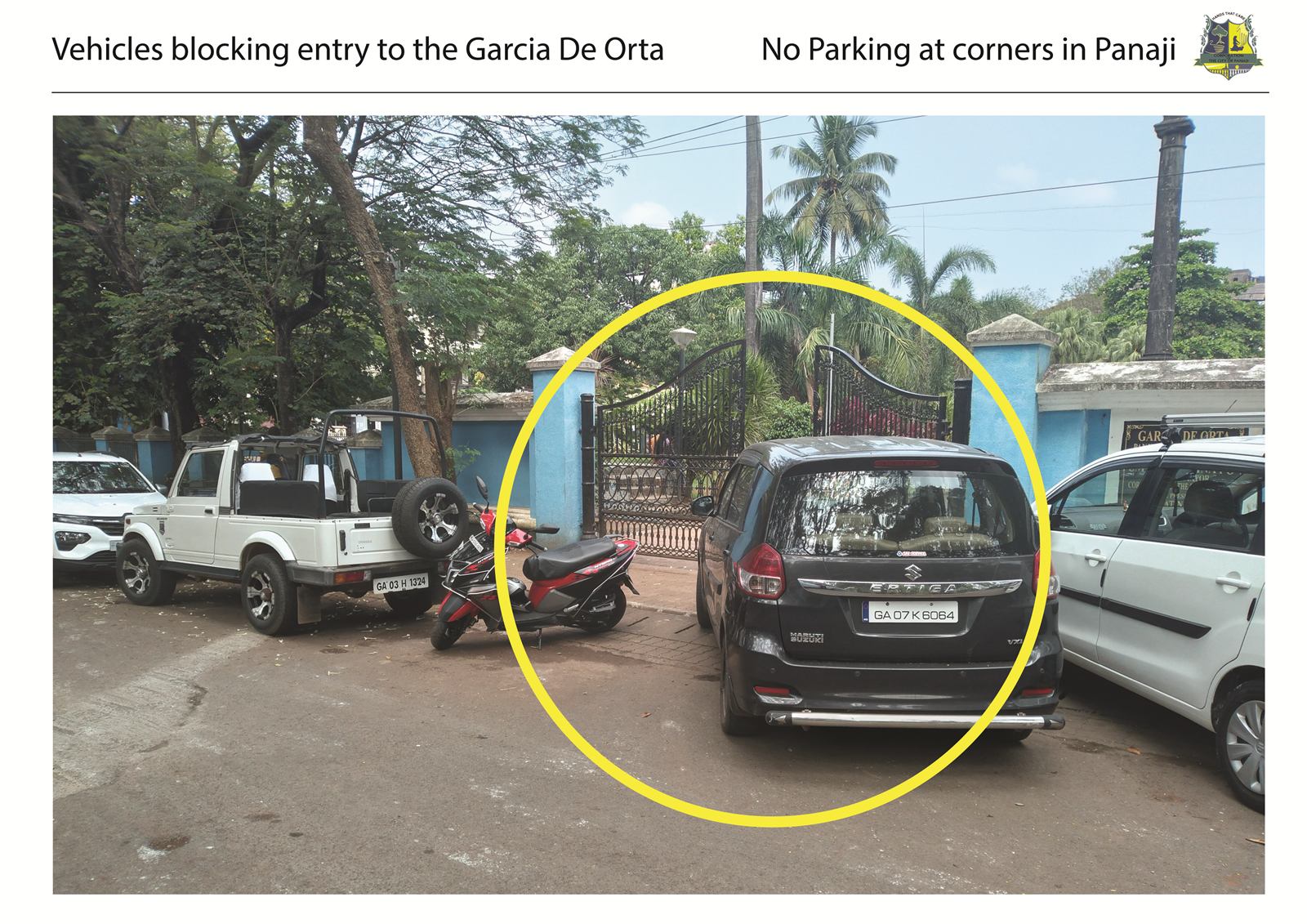
Every lane in central Panaji is full of parked cars, corners included. Parking at corners creates blind spots for turning vehicles and forces people with prams, wheelchairs and walking sticks off the footpath and into traffic. The city had no count of its own parking slots, and its pay-parking tenders kept failing.
What was done
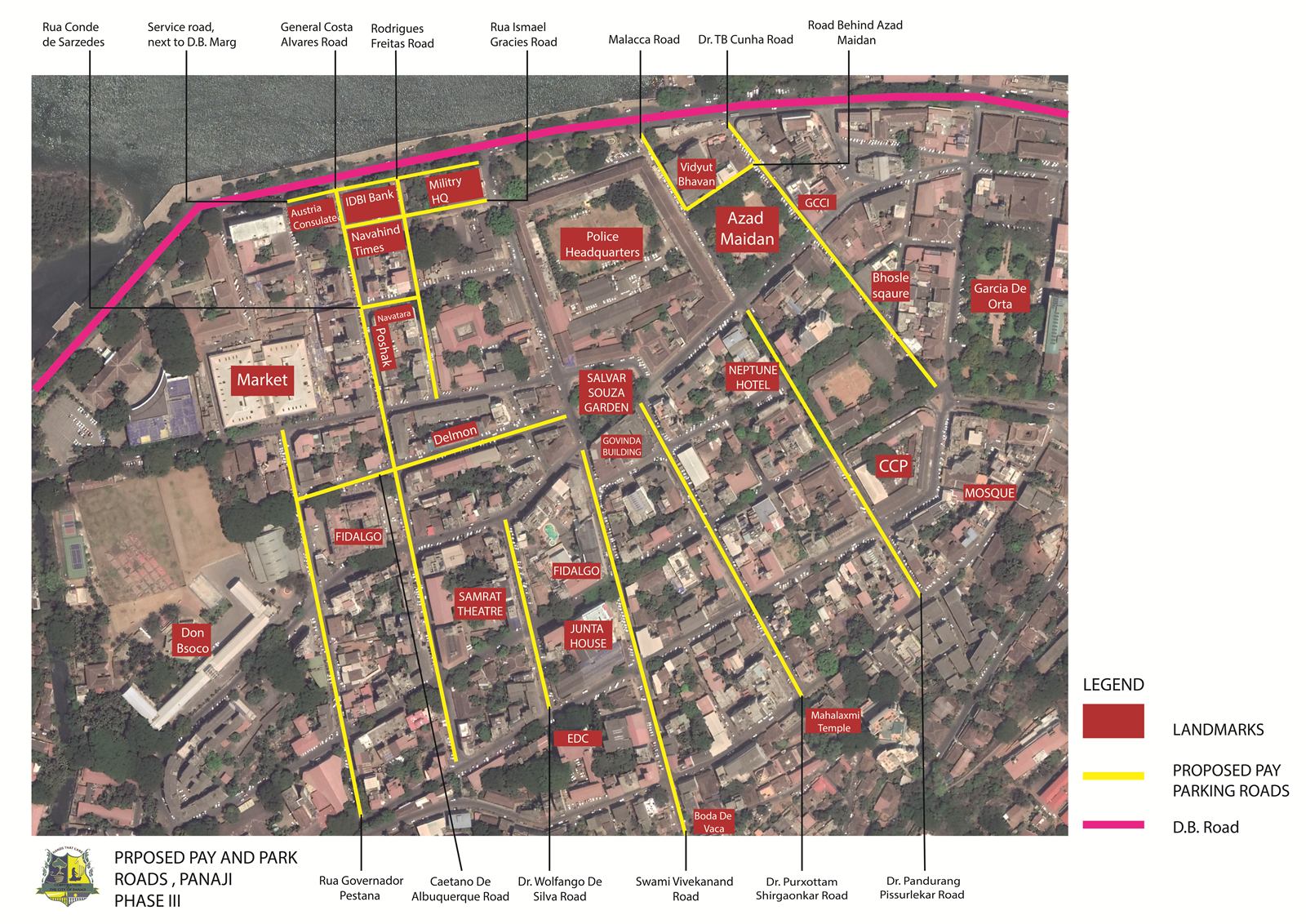
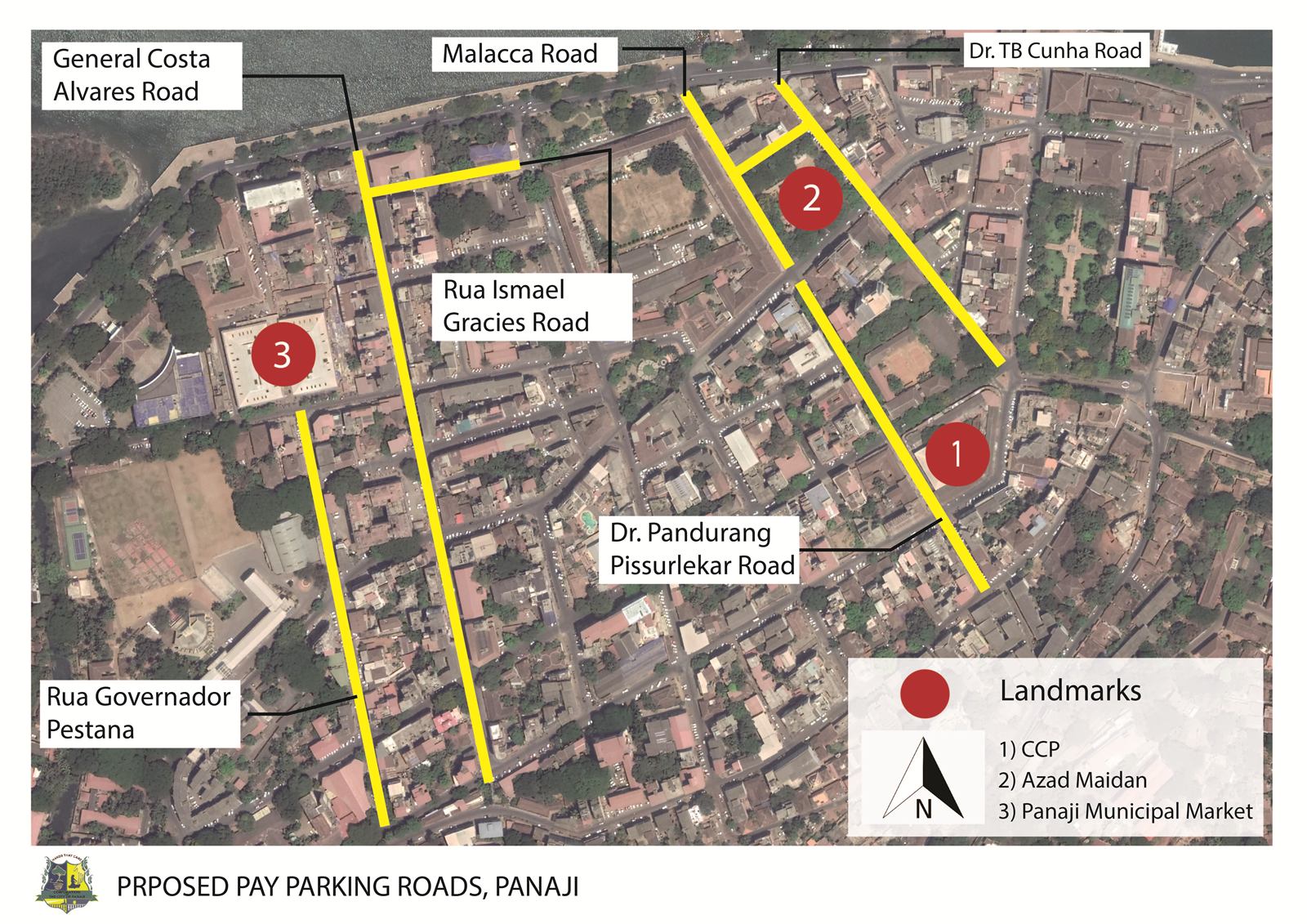
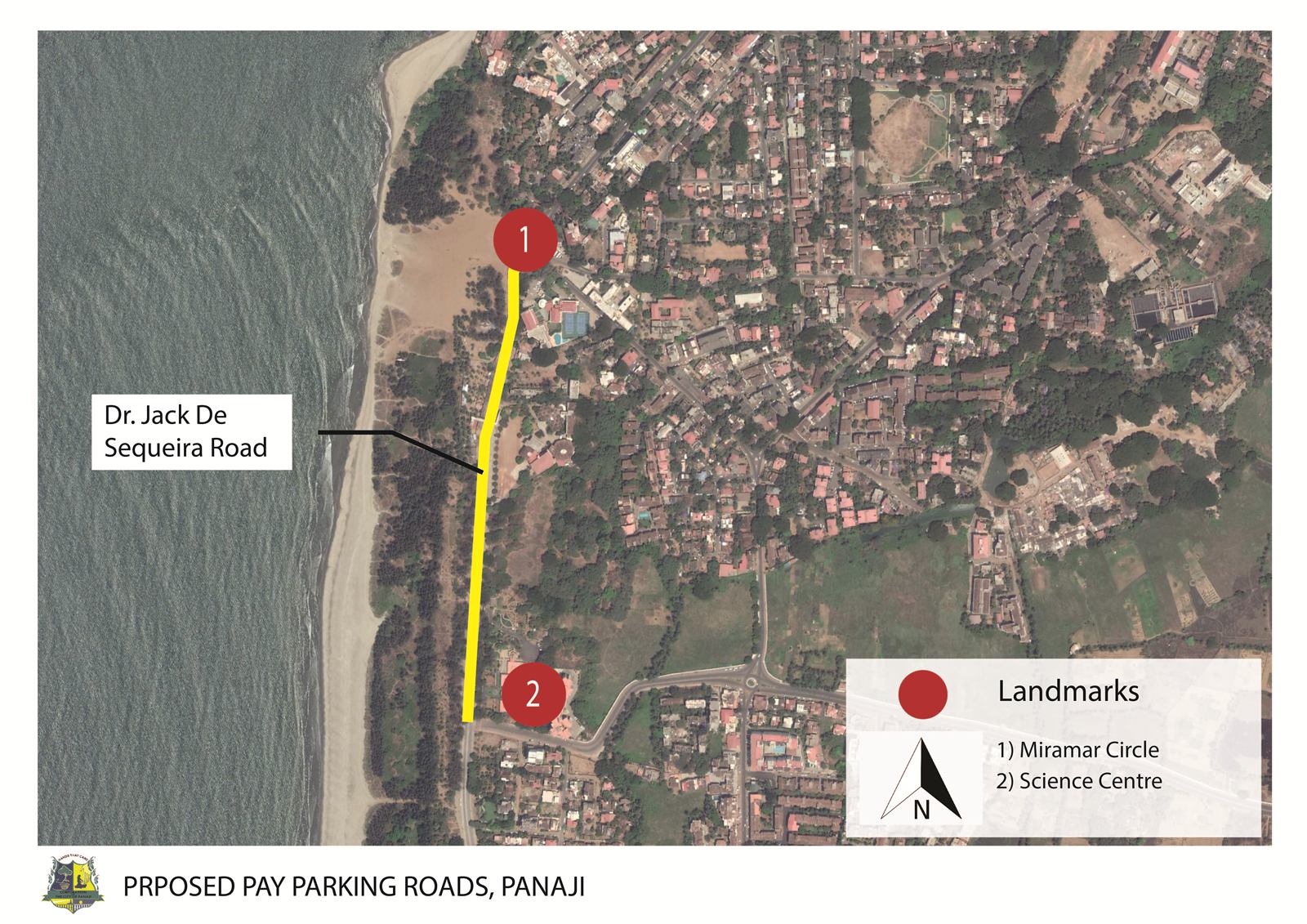
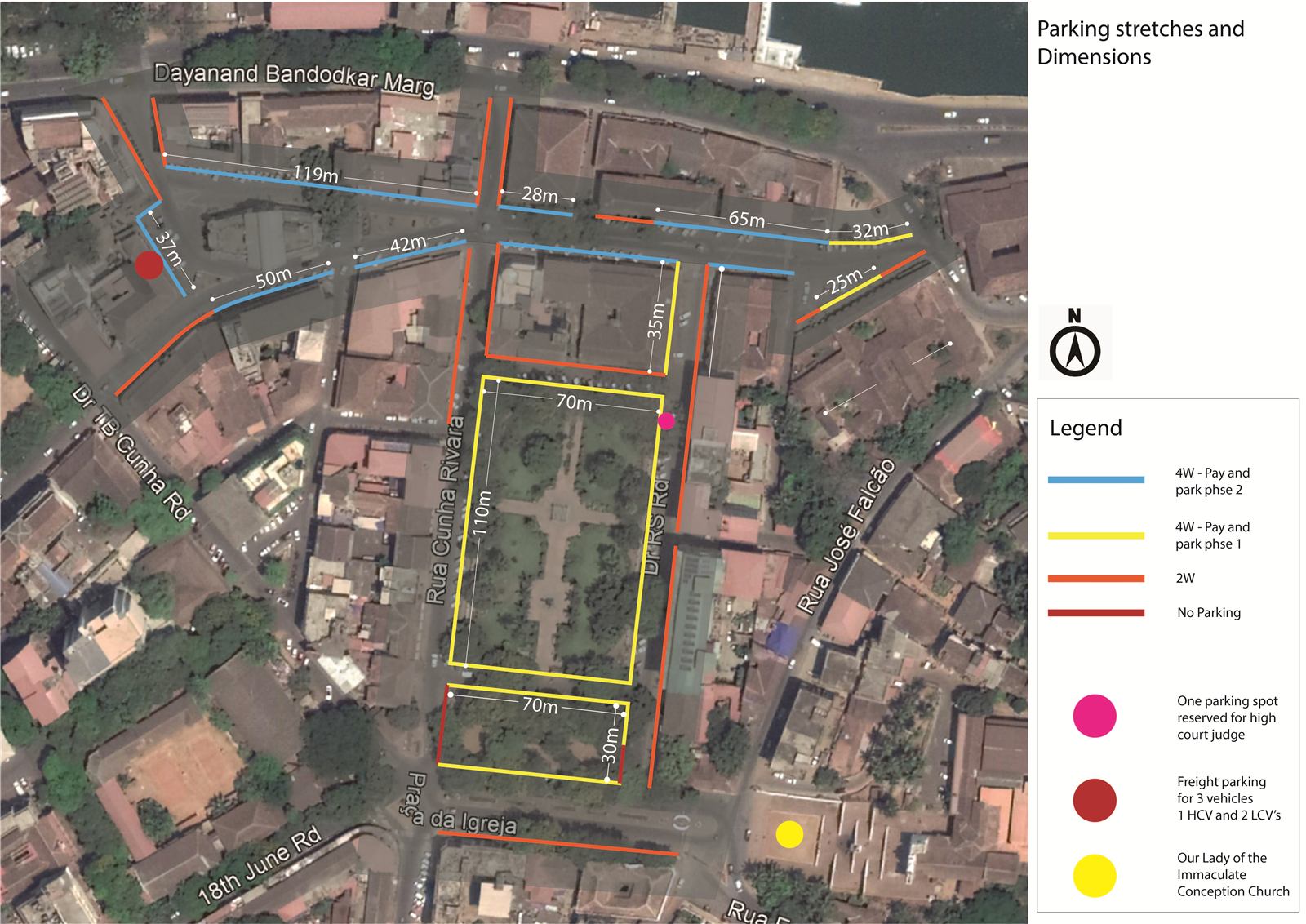
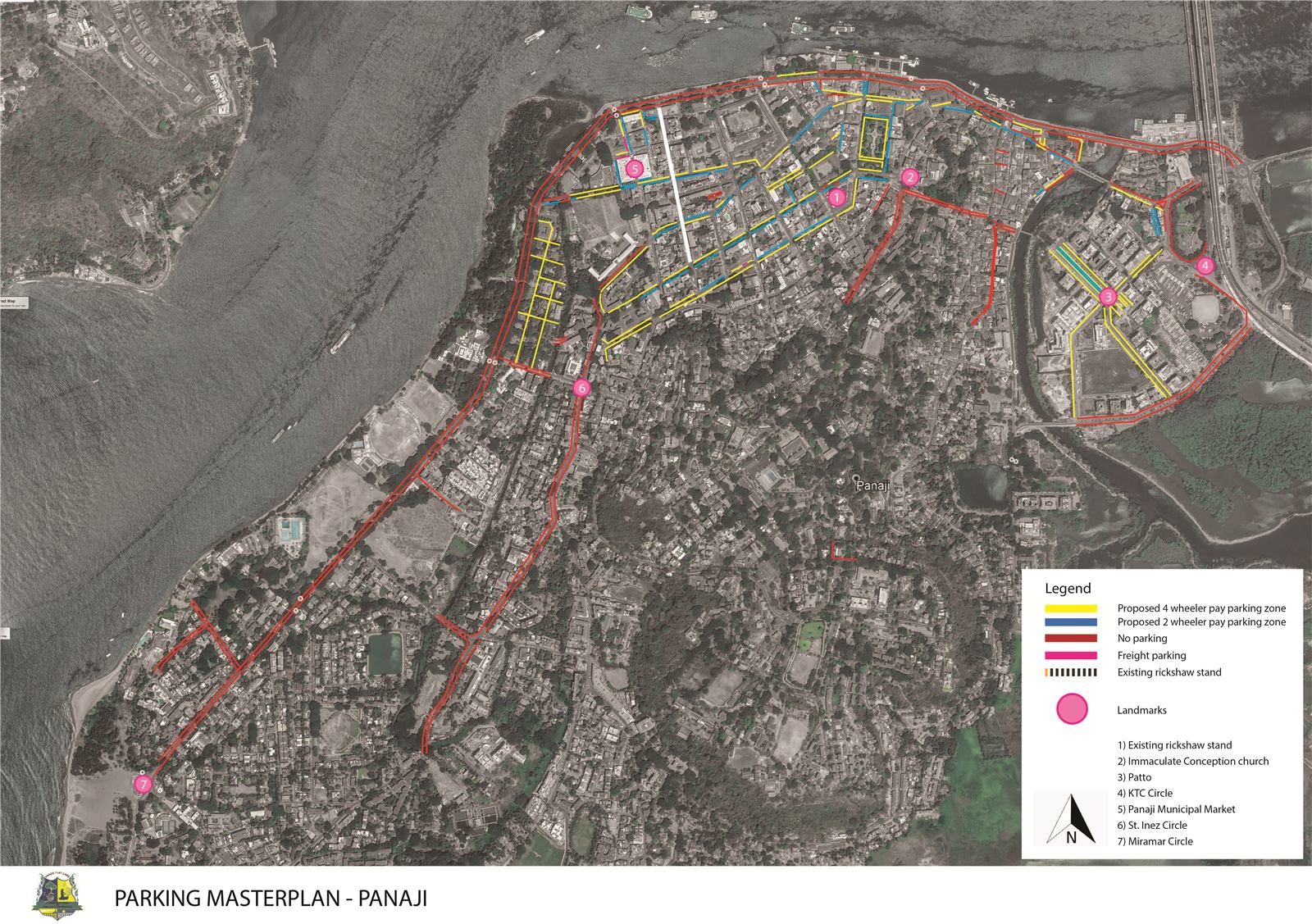
- Pay-and-park masterplan: road-by-road maps of proposed paid-parking streets across the city, prepared for council meetings in phases.
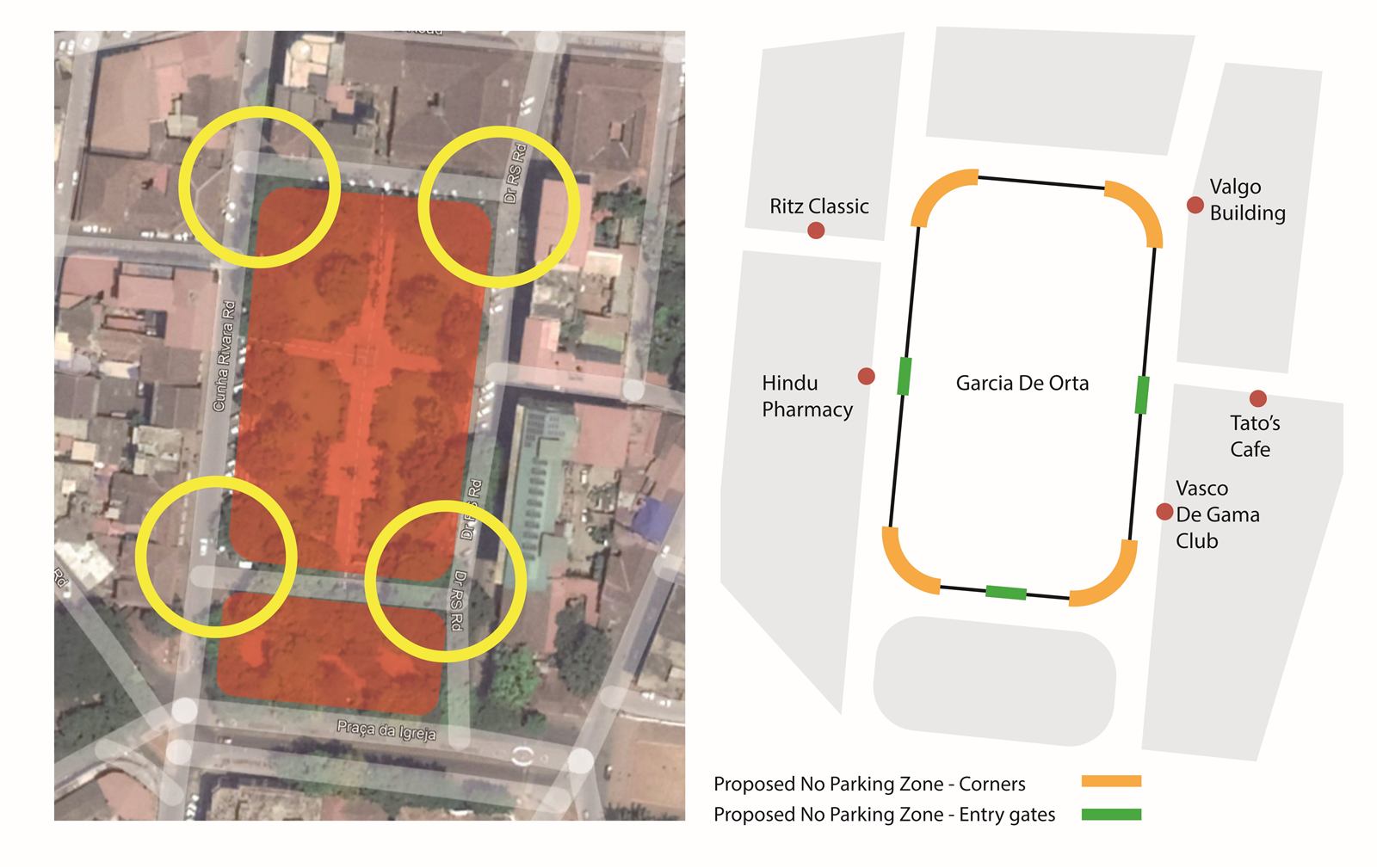
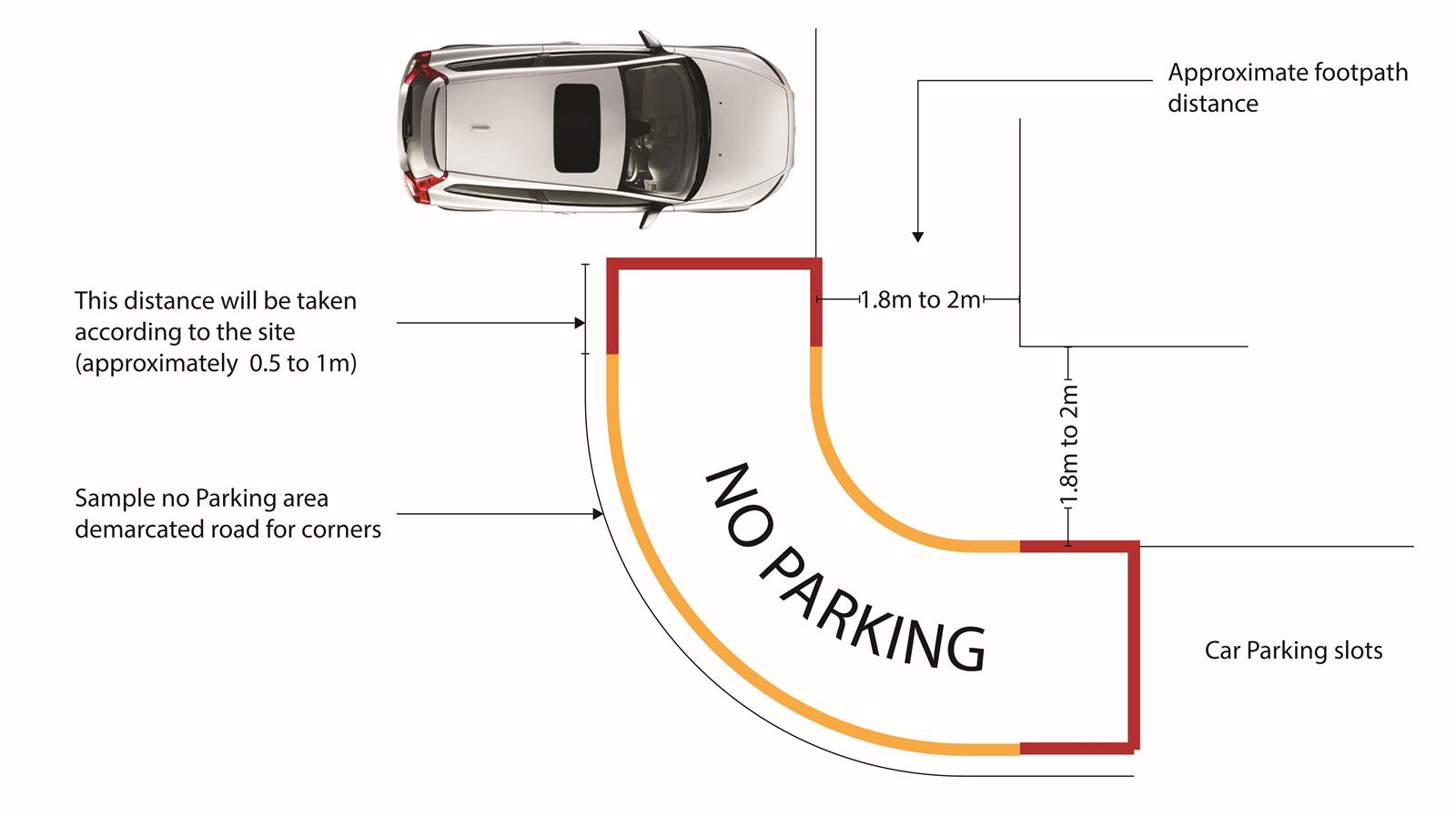
- No parking at corners: a study of how corner parking blocks turning, walking and access, with standard no-parking distances for corners. It fed a District Magistrate notification enforcing no-parking at designated corners.
- Smart parking pilot: a demarcated pilot area for smart parking, developed under the EU's International Urban Cooperation programme.
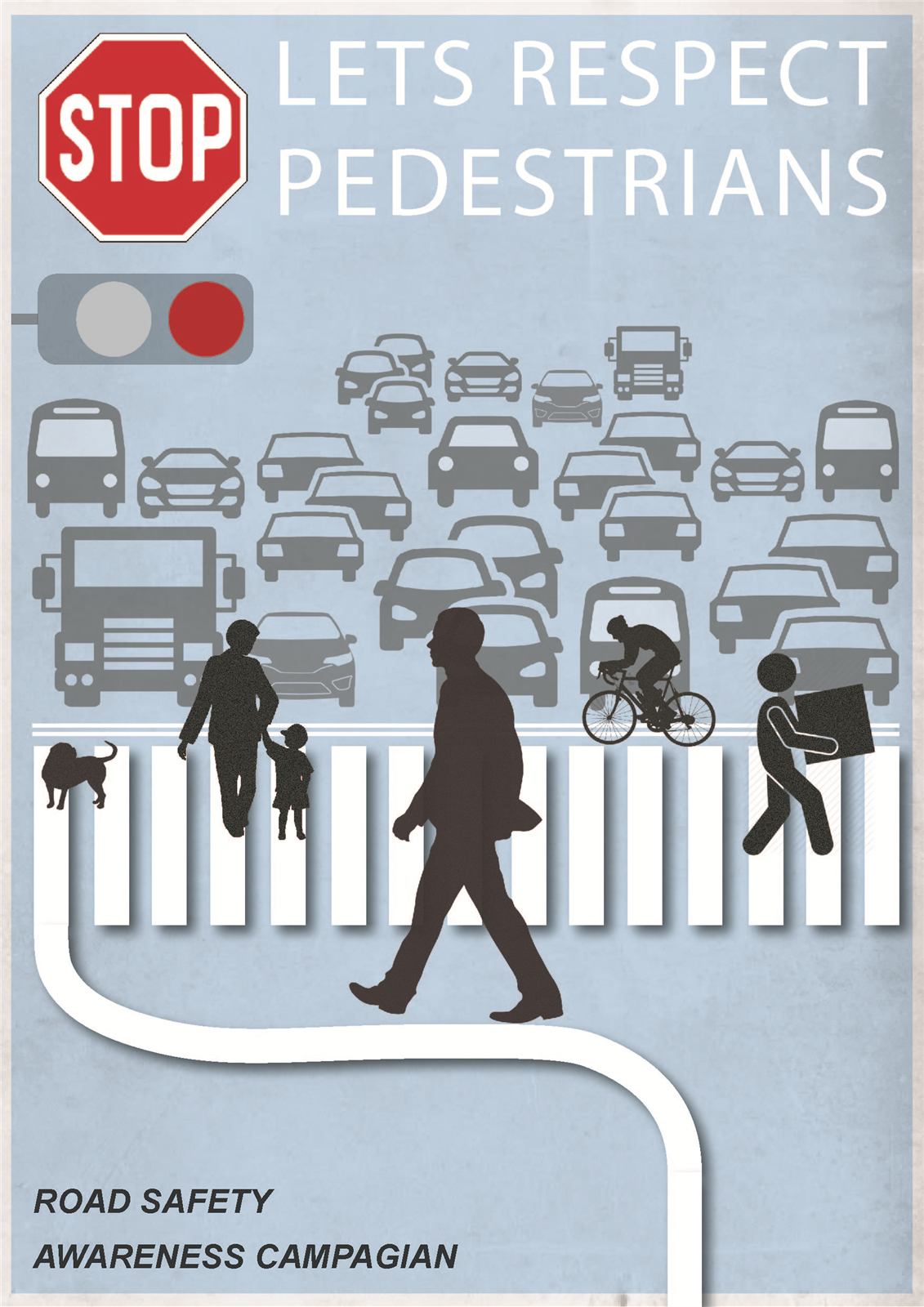
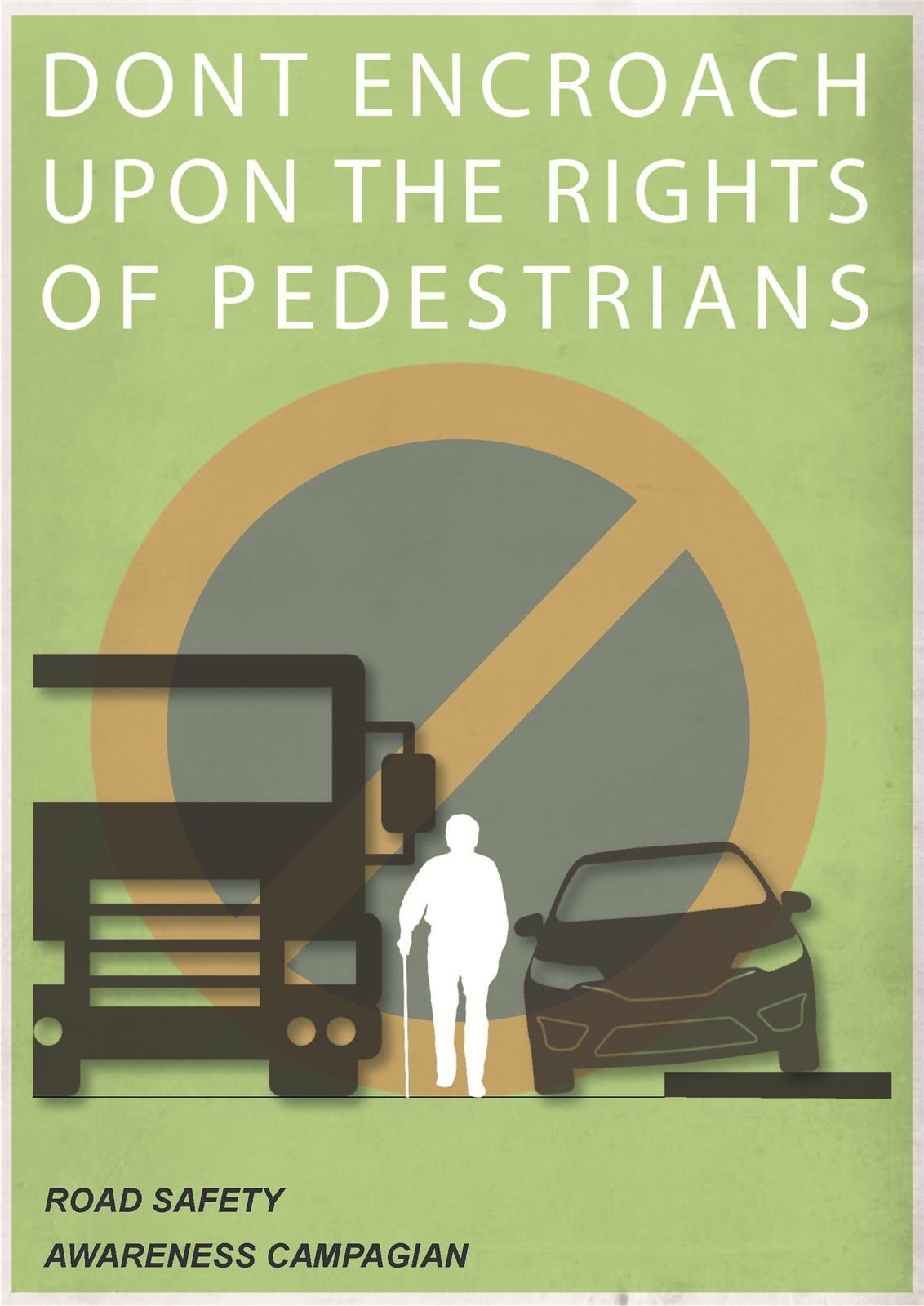
- Road-safety campaign: posters asking drivers to respect pedestrians and not encroach on footpaths.
The argument behind all of it, that Panaji's transport problem is one of access rather than mobility, is set out in Reforms in Panaji's pay and park policy.
Enforcement
A request for proposal for lifting, towing and clamping vehicles that break parking rules, for two-, four- and six-wheelers within the Corporation's jurisdiction, gave the pay-and-park system teeth. The smart parking pilot under the EU's International Urban Cooperation programme, with Dubrovnik as the partner city, covered the Phase 1 and 2 pay-parking area, about 297 cars.