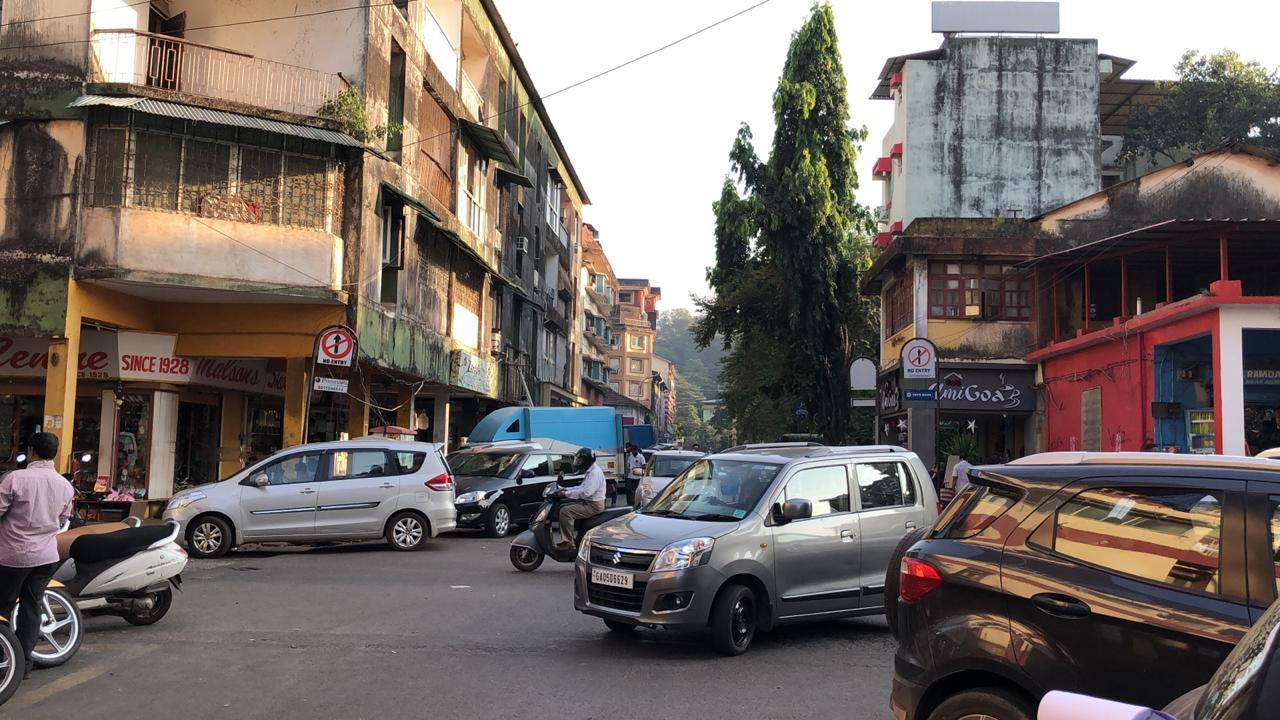
São Tomé, in Fontainhas, is the heritage ward of Panaji: Portuguese-era houses, painted facades and lanes made for walking. Tourism and commerce brought a flood of vehicles, mostly rented bikes and cars and non-resident traffic, into lanes that were never built to carry them.
What residents were living with
- Vehicles entering against no-entry signs, and drivers ignoring the rules.
- Rental and tourist vehicles parked anywhere, including in the middle of the road.
- Parking on corners that created blind spots and the risk of serious accidents.
- Front doors blocked, and residents' own vehicles damaged.
- Tour cabs double-parking while passengers stepped out for photos.
- Elderly residents unable to walk or cross safely.
- The fear that ambulances and fire engines couldn't get through.
- Almost no enforcement.
This quarter, preserved by its residents for generations, was being worn down by traffic.
From a street to a council vote
The Corporation decided to make the São Tomé Old Quarter a No Motor Vehicle Zone. I worked with the Mayor, the Corporation's technical section, senior engineers and the ward councillor to develop the plan. That meant assessing every road stretch on the ground, holding discussions with residents and drafting the policy document.
The proposal went to the Corporation's council, was approved, and was sent to the District Collector for official notification. It was part of a wider push in core Panaji covering pedestrianisation, road safety, signage and parking. The parking side is written up in Reforms in Panaji's pay and park policy.