Cities run on deliveries: food, groceries, parcels and building materials. Globally, freight vehicles make up as much as a quarter of urban traffic, take around 40% of road space used by motor vehicles, and produce up to 40% of urban transport CO₂. Yet freight is rarely planned for. EcoLogistics, led by ICLEI and funded by Germany's International Climate Initiative, worked with nine cities in India, Argentina and Colombia to change that. Panaji was one of them.
1 · Counting what moves
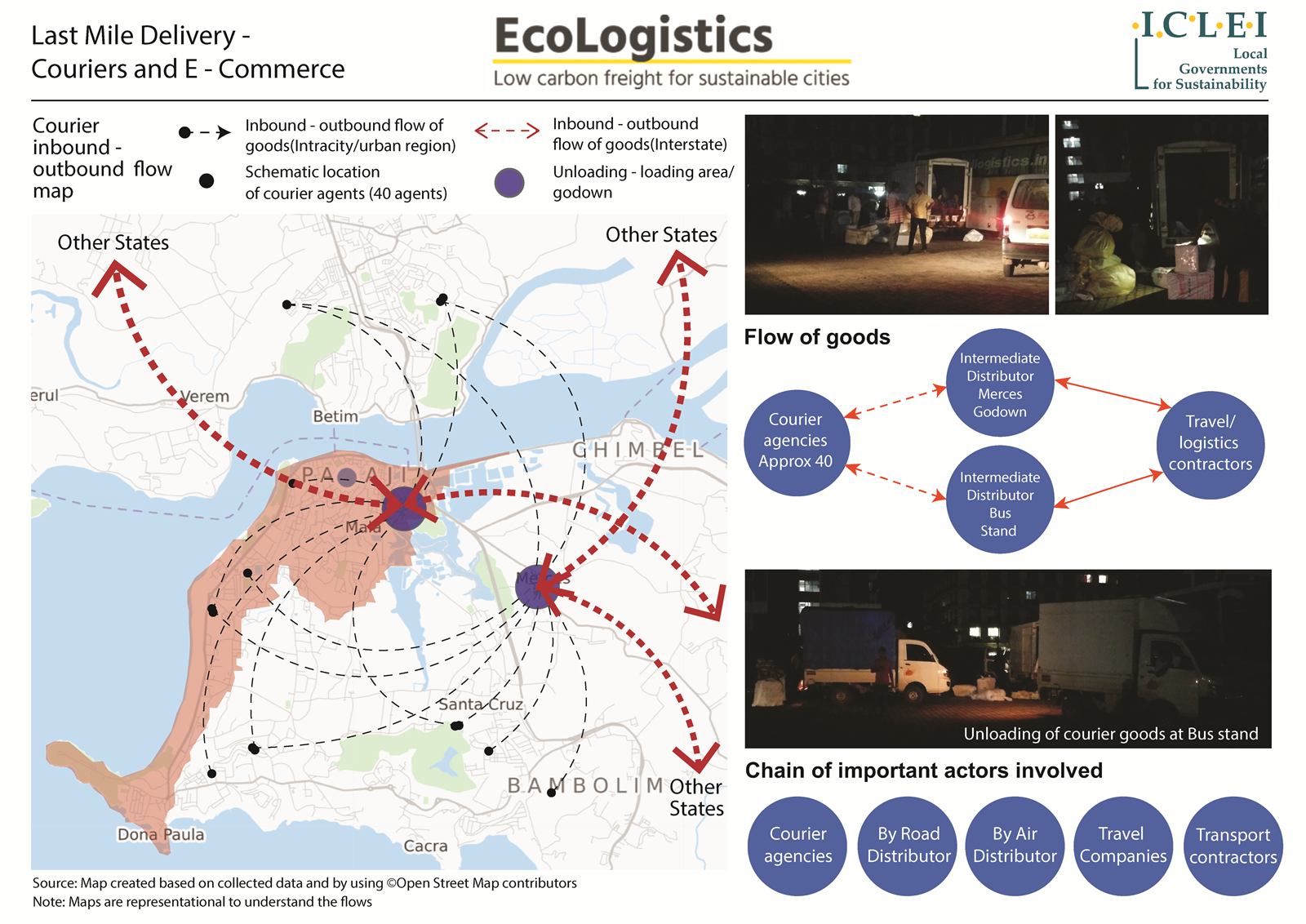
Before planning anything, we had to see how goods actually move through Panaji. Supply-chain mapping and surveys, and more than 90 interviews with traders, transporters, delivery firms, police and officials, built a citywide picture and a network of people. That network became Panaji's first multi-stakeholder committee for decisions on urban freight.
2 · A plan for freight
The Low Carbon Action Plan for Urban Freight sets out how to keep goods moving while reducing harm to air quality, noise, public health, road safety and congestion, and cutting greenhouse gas emissions. It was the first time an Indian city developed low-carbon approaches specifically for freight. Each measure was shaped by the people who would have to live with it.
3 · Electric on the street
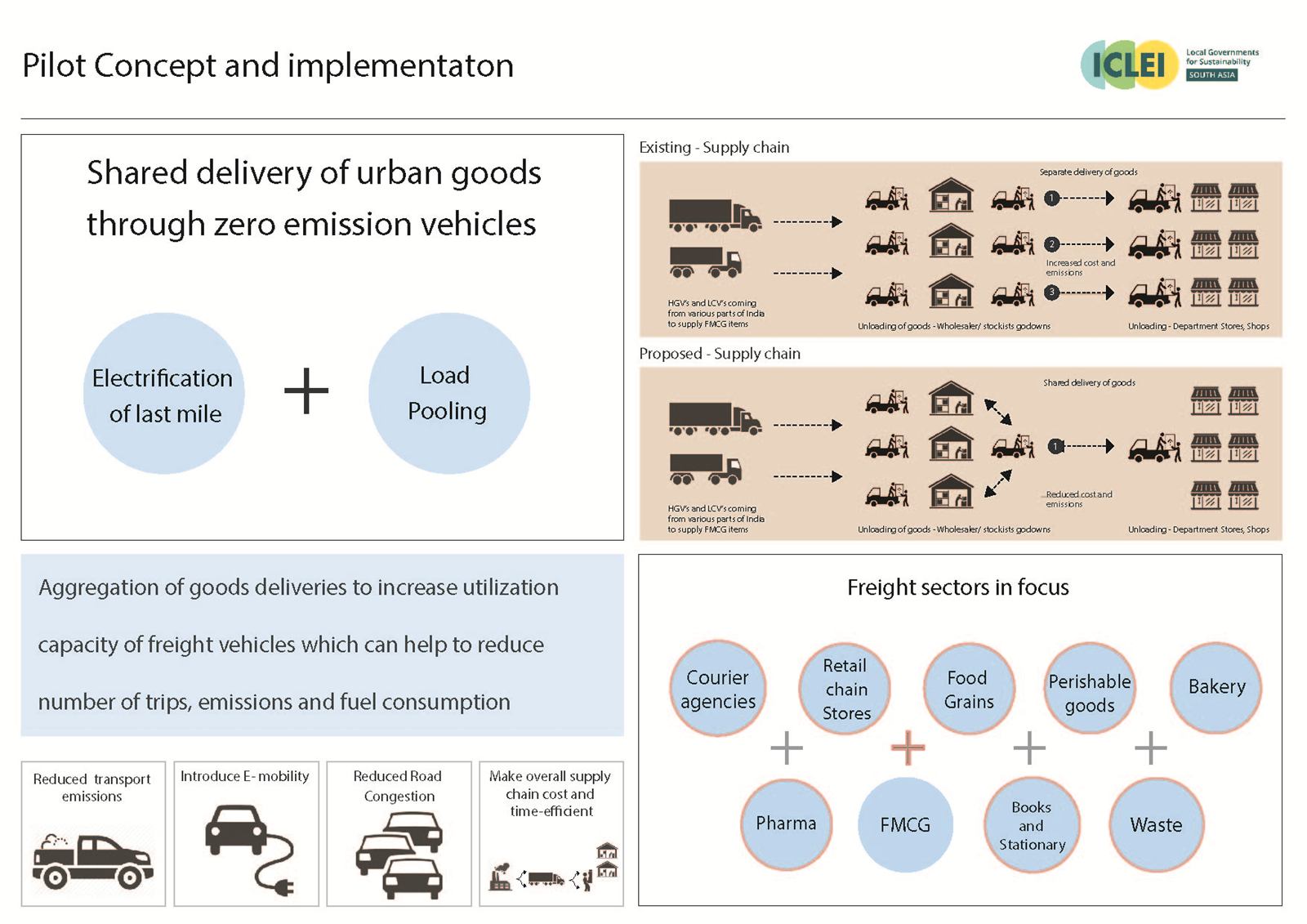
In 2022, the Corporation of the City of Panaji and ICLEI South Asia put 14 electric light commercial vehicles and 15 electric cargo bikes into service, shifting deliveries from diesel and petrol to electric. The pilot also tested load pooling to make last-mile delivery more efficient. It showed that electrifying city freight is feasible, and gave the state and national governments evidence to build on.