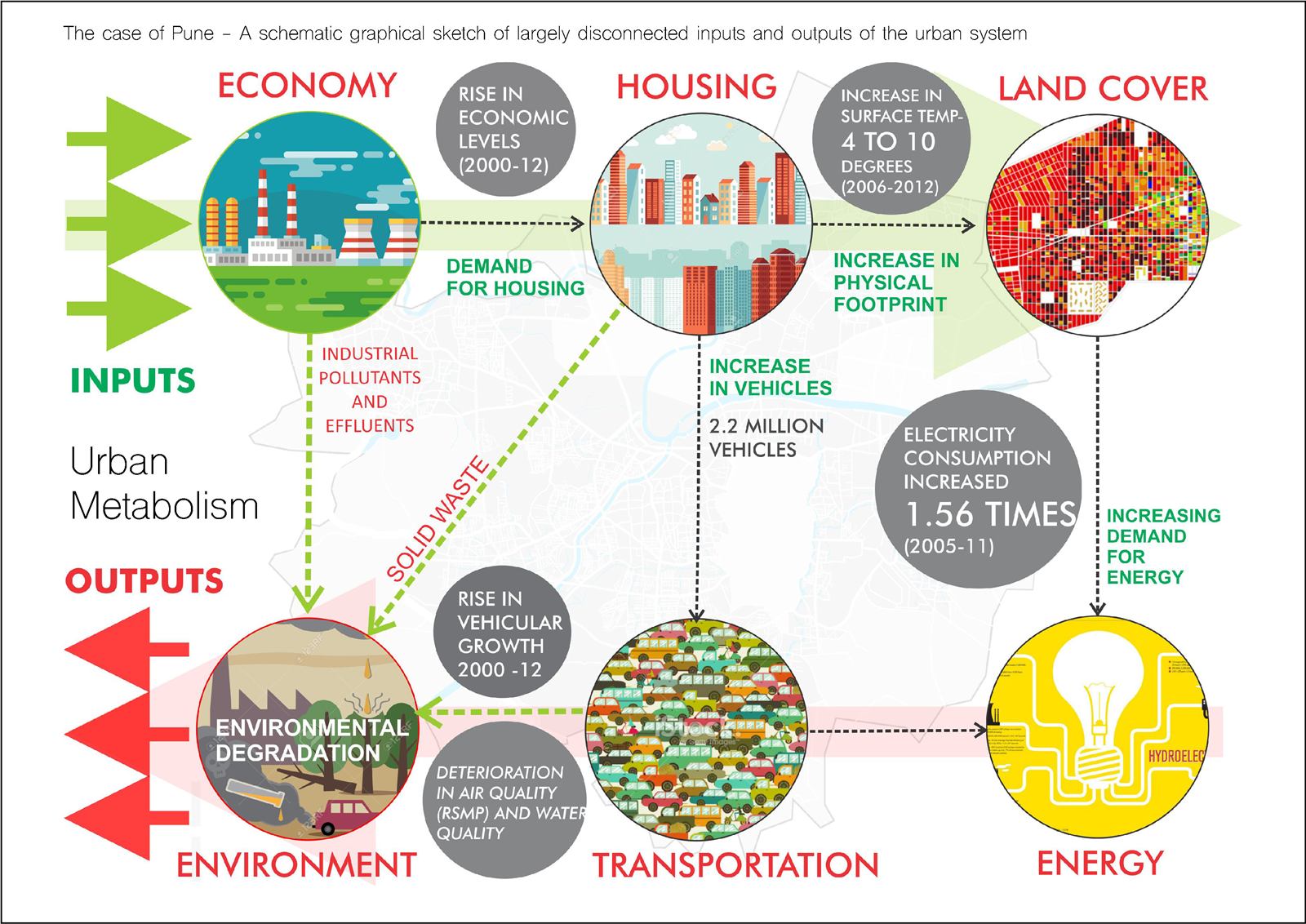
Urban metabolism looks at a city through the flows of energy, water, materials and waste that pass through it. Inputs like fuel, food and electricity are processed and turned into outputs: waste, emissions and heat. Mapping those flows shows the links and feedback loops that shape a city's growth and its environmental impact.
In Pune, the map revealed how uncoordinated growth in housing, transport, land use and energy strained the city's systems. Economic growth between 2000 and 2012 drove a surge in housing demand and vehicles, which crossed 2.2 million. Electricity consumption rose 1.56 times between 2005 and 2011, and surface temperatures rose by 4 to 10°C between 2006 and 2012. Solid waste, industrial pollution and falling air and water quality followed.
When sectors grow without seeing each other, the city pays the bill.
A systems-based approach to planning and governance, one that tracks how sectors affect each other, is the way to healthier and more resilient cities.